

The end of learning apps?
Ditch the apps: a look at the future of frictionless learning at the age of AI.

📝 OPENING NOTE
We keep trying to fix screen time by redesigning the interface. Less glass, more voice... But LLMs made me wonder if the real shift isn't about the screen at all. It's about what happens to apps.
💡 THE IDEA
From Apps to Answers: The Future of Learning Interfaces
For more than a decade, the EdTech world has revolved around apps. Bright icons on a device, each promising to teach us something new.
A math app for practice. A language app for vocabulary. A science app for experiments.
They’ve been our go-to tools, each self-contained, each fighting for space on our home screens.
But what if, one day, the apps disappeared?
From multiple apps to a single learning platform
The idea isn’t as far-fetched as it sounds. AI tools are already operating across services, not just answering questions, but taking action: updating your calendar, booking a flight, sending emails. You just ask, and the system finds the best way to fulfill your request.
Apply that logic to learning, and the shift becomes clear. You might say:
“Help me prepare for my French exam next week.”
And instead of deciding whether to open Duolingo, YouTube, Quizlet, or Google Docs, the system:
🔤 Pulls vocabulary sets from your favorite language learning provider
🎧 Finds YouTube videos or podcasts matched to your current level
✏️ Generates practice quizzes via an AI tutor
⚠️ Flags gaps in your knowledge based on quiz results and adjusts the plan accordingly
📩 Sends you a recap or flashcard set at the end of the day via your messaging app
📅 Books 20-minute study sessions with classmates directly in your calendar
No more switching between apps, logging in to different platforms, or manually moving information from one tool to another.
One conversation. All your learning needs met.
The power of integration
This vision combines the strengths of multiple services into a seamless, personalized flow:
Between learning apps: A history article from one platform could be repurposed as a reading comprehension exercise in another. A coding challenge could instantly become a collaborative project with peers.
With other services: Analytics from your workouts could feed into your biology lessons. Calendar apps could schedule practice sessions on your weakest topics. Messaging platforms could auto-create study groups based on shared goals.
In this world, “app” becomes a background concept. The real value lies in the content and services, not in the container.
But not a one-size-fits-all world
Even in this app-less future, subscriptions and preferences would still matter. Not all learners thrive with the same approach, and personal fit would remain critical.
Pricing models might shift too. Rather than flat monthly subscriptions, we could see dynamic, usage-based payments, closer to how AI tokens work today, but extended across all services. Content and tools would be broken into granular units, each individually priced and consumed as needed. You’d pay for what you actually use, not for access to a bundle you only partially open.
Instead of browsing an app store, you’d curate a learning library, selecting trusted providers, setting spending limits and consumption thresholds, and let your device orchestrate them in the background.
What would this mean for EdTech?
If we ever reach this point, it could fundamentally reshape the industry:
From brand-first to content-first: Learners may care less about which app they’re using, and more about the quality, adaptability, and integration of its resources.
Competition on quality, not retention: Unified platforms will route requests to whichever service performs best, making learning outcomes and content quality the primary competitive metrics, rather than engagement tricks designed to keep users inside a walled garden. That pressure could drive a meaningful overall improvement in what’s being offered.
New business models: Companies might license their content to be embedded in unified platforms rather than fighting for user retention in their own siloed apps.
Focus on interoperability: Open standards and APIs would become essential, allowing different learning systems to share data, progress, and personalization.
How likely is this?
The tech is already here: AI orchestration, real-time search, API-driven integration. Platforms like Mammouth.ai already unify multiple AI models behind a single interface.
But business incentives are the sticking point. Companies have strong reasons to keep you inside their ecosystem, and breaking those walls will require learner demand, educator advocacy, and possibly regulation favoring data portability.
History suggests that when technology removes friction, adoption moves fast. The question isn’t really if. It’s whether the transition will prioritize the learner’s needs or the platform’s profits.
Until then, we live in an app-based world.
But the idea of “no more apps” might be closer than we think.
👀 WORTH YOUR ATTENTION
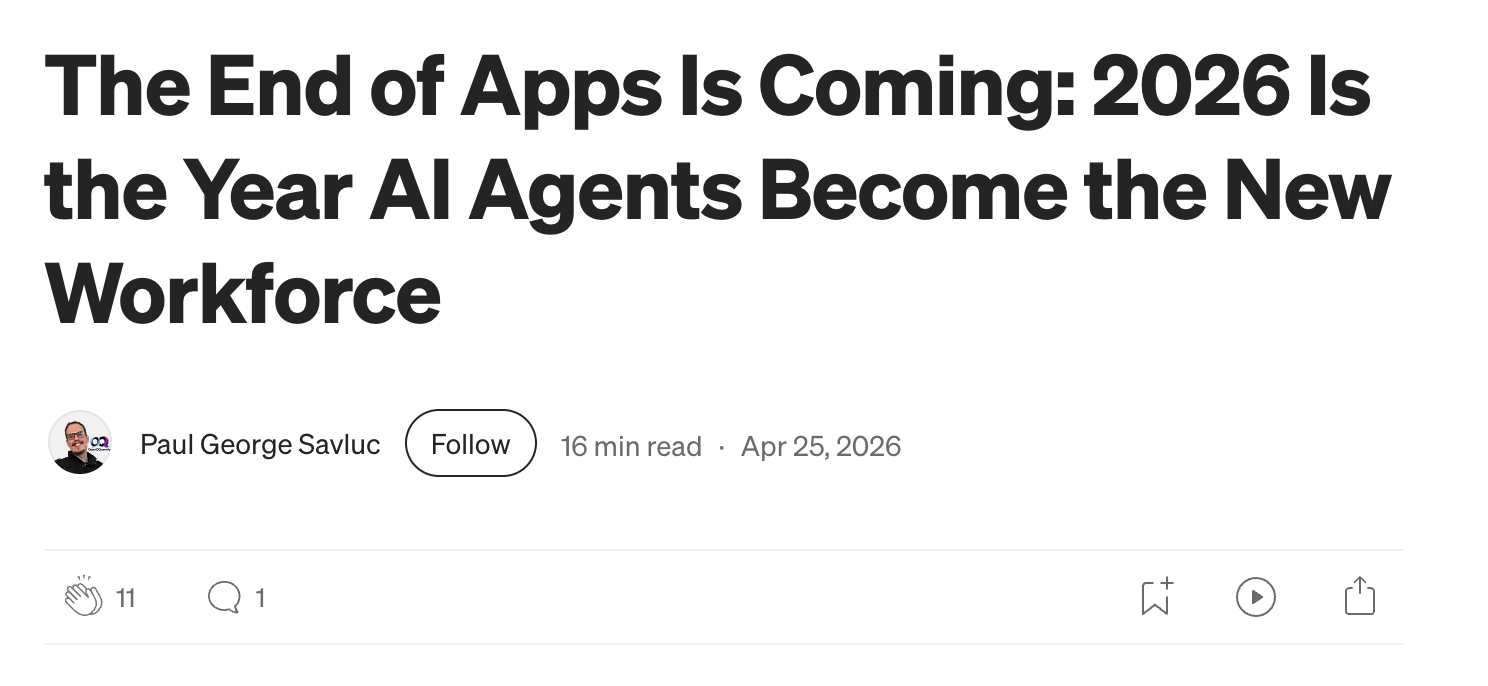
"The End of Apps Is Coming" — Paul George Savluc
A sweeping look at how AI agents are replacing the app layer across industries, with concrete examples of what that looks like in practice. Asks the right questions about trust, governance, and who controls the workflow. Worth reading alongside this issue to see how far the logic extends beyond EdTech.
A single interface that routes your prompts across multiple AI models. A small but telling proof of concept for the unified platform idea this issue explores.